A Microscope for Precision Wire Harness Processing: In-Depth Technical Analysis of TCA-120 Series Terminal Cross-Section Analyzers
A Microscope for Precision Wire Harness Processing: In-Depth Technical Analysis of TCA-120 Series Terminal Cross-Section Analyzers
In the new energy vehicle (NEV), aerospace, and precision electronics industries, the reliability of wire harness connections is the cornerstone of system safety. Traditional terminal crimp quality inspection often relies on pull-force testing, but a passing pull-force value does not equate to a perfect connection. To detect hidden defects within the crimp, terminal cross-section analyzers have become an indispensable "quality control microscope."
 I. Why Pull-Force Testing Is No Longer Enough
Traditional pull-force testing only reflects the mechanical connection strength between the terminal and the wire, failing to reveal the micro-physical state inside the crimp. In environments carrying high current or high-frequency signals, the microscopic structure within the crimp is far more critical:
- Improper Compression Ratio: Loose compression leads to increased contact resistance, potentially causing heat generation or even fire. Over-tight compression can damage the copper strands, reducing mechanical fatigue resistance.
- Internal Voids: Residual air within the crimp area can lead to metal oxidation, causing connection failure over long-term use.
- Geometric Symmetry: Whether the crimp wings completely wrap around and whether any flash occurs directly affects sealing performance and mechanical lifespan.
II. TCA-120 Series: Fully Automatic, Integrated Inspection Workflow
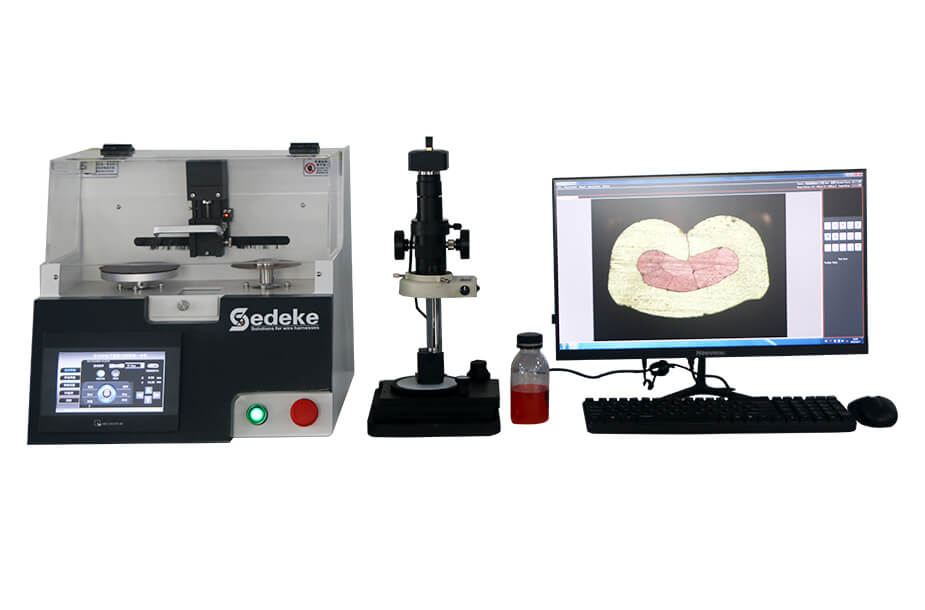
The TCA-120 Series utilizes a fully automatic, integrated design, consolidating laboratory inspection processes that were previously fragmented and complex into standardized operations completed within minutes:
- Precision Cutting: The built-in high-speed cutting module is capable of obtaining a flat cross-section without disrupting the terminal's original crimped state.
- Automatic Grinding and Polishing: Targeting various materials (copper, aluminum, alloys, etc.), the system offers multi-stage grinding plans to ensure the cross-section achieves a mirror-finish effect.
- Chemical Cleaning (Corrosion): Rapidly reveals the outlines of different metal interfaces, making the boundaries of copper strands clearly visible.
- Microscopic Imaging and Analysis: Combining a high-magnification optical zoom system, microscopic details are transmitted to professional software for quantitative analysis. PDF reports compliant with international standards (such as IPC/WHMA-A-620) can be generated with a single click.
III. TCA-120 and TCA-120S: Comparison of Technical Specifications
1.The terminal cutting range of the TCA-120 is 0.01-33.62mm², while the applicable wire range of the TCA-120S is 0.05mm² to 120mm².
2.The industrial camera pixels of the TCA-120 are 5 million, and the industrial camera pixels of the TCA-120S are 12 million.
3.Software Interaction Logic: From "Manual Definition" to "Templated Comparison"
At the software processing level, the TCA-120 and TCA-120S demonstrate different design philosophies:
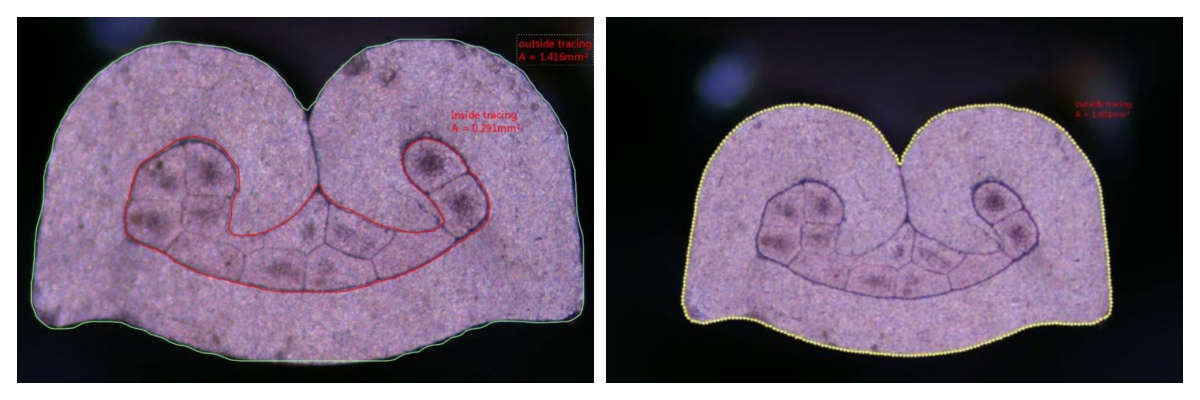
- The Flexibility of TCA-120: Employs mouse-based manual outline description technology. Operators can perform precise manual auxiliary measurements on odd-shaped terminals based on real-time imaging. This grants it extremely high adaptability when dealing with complex prototypes or non-standard parts during the R&D phase.
- The Efficiency of TCA-120S: Introduces a standardized crimping template comparison system. The software is built-in with various common crimping shape templates specifically for automotive-grade connectors. Through "one-click invocation + intelligent alignment," the system can rapidly lock onto crimp wings, support angles, and compression areas, drastically reducing the single-part inspection cycle time and ensuring high uniformity of quality inspection data across different shifts.
This system is originally imported and possesses dozens of international standard automatic inspection items (encompassing various authoritative technical indicators for the automotive, home appliance, and electronics industries, etc.). It automatically analyzes multiple standards such as VW 60330, VWI, SAE/USCAR-21, Renault36-05-019/--G, and PSA 9634115099 (featuring Section-ms, currently the most advanced one-click scanning software in the industry).
IV. Key Judgment Indicators: Data-Driven Quality Control Standards
Using TCA series equipment, quality inspection personnel can accurately measure the following key indicators based on international standards such as IPC/WHMA-A-620:
- Compression Ratio: The calculation formula is S=Sa/Sb ×100%
(where Sa is the total area of the copper wires after crimping, and Sb is the original area before crimping). The ideal value is typically between 80% and 90%.
- Support Angle: Evaluates the curling morphology of the crimp wings to ensure they exert uniform compression on the wire core.
- Flash Detection: Monitors the wear condition of the crimping mold to prevent flash from piercing the insulation layer.
(Source: Refers to IPC/WHMA-A-620 Cable and Wire Harness Assembly Acceptance Standards)
V. Special Applications: New Energy High-Voltage Wire Harnesses and Odd-Shaped Terminals
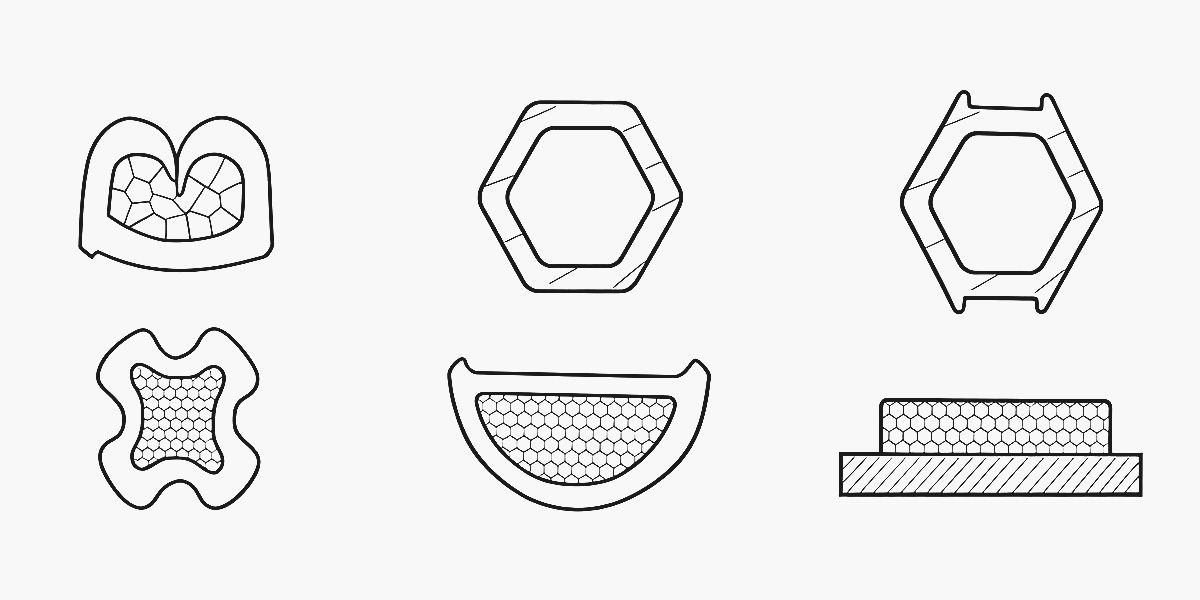
As the voltage platform of new energy vehicles rises to 800V, the requirements for crimping high-voltage wire harnesses are nearly draconian. The TCA-120 series can handle not only conventional cylindrical terminals but also:
- Aluminum Wire Crimp Analysis: Monitors the fracture of the oxide layer on the surface of aluminum wires to ensure electrical conductivity.
- Odd-Shaped Terminals (e.g., Ultra-Large Square Copper Bars): Through a stable mechanical clamping system, ensures the perpendicularity of large-specification cross-section cutting.
VI. Conclusion
The TCA-120 and TCA-120S series terminal cross-section analyzers are not merely inspection tools but are pivotal keys for enterprises transitioning from "experience-based processing" to "digital manufacturing." Through in-depth analysis of crimp cross-sections, manufacturers can optimize mold parameters, reduce material waste, and ultimately ensure the performance of every wire harness under extreme working conditions (such as high temperature and high vibration).

 EC-6100 Automatic Heat Shrink Tube Cutting Machine EC-6800 Automatic Cutting Machine EC-6100H Automatic Hot Cutting Machine EC-830 Corrugated Tube Cutting Machine EC-6500 Automatic Cable and Tube Cutting Machine EC-810 Automatic Cable Cutting Machine EC-850X Automatic Rotary Cutting Machine EC-821 Corrugated Tube Cutting Machine EC-890 Multifunctional Automatic Cutting Machine EC-870 High-power Automatic Tube Cutting Machine EC-816 Automatic Cutting Machine EC-823 High Speed Cutting Machine EC-805 Automatic Cable Cutting Machine EC-860 Corrugated Tube Cutting Machine EC-830F Automatic Tube Cutting Machine With Feeding System EC-830FS Tube Cutting Machine With Feeding System EC-3100 Automatic Cable and Tube Cutting Machine
 CS-BT802 Automatic Shield Braid Brushing & Twisting Machine CS-2023T Automatic Coaxial Cable Stripping Machine CS-0520 Semi-Automatic Coaxial Cable Stripping Machine CS-4507/6010 Multifunctional Wire Stripping Machine UniStrip 2016 Pneumatic Wire Stripping Machine UniStrip 2018E Electric Cable Wire Stripping Machine CS-5507 Automatic Coaxial Cable Stripping Machine CS-5515 Automatic coaxial cable stripping machine CS-400 Braided Shield Cable Stripping Machine CS Series Rotary Cable Stripping Machine CS-2486 Coaxial Cable Wire Stripping Machine
 TM-P01 Terminal Crimping Machine TM-20 Terminal Crimping Machine TM-20S Automatic Wire Terminal Crimping Machine TM-200 Terminal Crimping Machine TM-10P Registered Jack Crimping Machine TM-E140 Pre-insulation Ferrule Terminal Strip And Crimp Machine TM-E140S Automatic Wire Stripping Ferrule Crimping Machine TM-P300 Pneumatic Terminal Crimping Machine TM-E116 Electric Terminal Crimping Machine TM-P120 Pneumatic Terminal Crimping Machine SAT-AS6P Pneumatic Crimping Applicator SAT-MS6 Mechanical Crimping Applicator Side Feed Terminal Crimping Applicator Rear Feed Terminal Crimping Applicator Hexagonal Terminal Crimp Applicator Flag Terminal Crimping Applicator Crimp Applicator for Insulated Terminals TM-T Series Intelligent Servo Terminal Crimping Machine SAT-MS5 OTP Mechanical Applicator TM-25M Automatic Terminal Crimping Machine
 ESC-BX4 Wire Cutting And Stripping Machine ESC-BX30 Automatic Large Cable Cutting and Stripping Machine ESC-BX30S Sheathed Cable Automatic Cutting and Stripping Machine ESC-BXR Automatic Rotary Cable Stripping Machine ESC-BX6 Wire Cutting And Stripping Machine ESC-BX7 Wire Cutting And Stripping Machine ESC-BX8S Sheath Cable Cutting and Stripping Machine ESC-BX8PR Wire Cutting And Stripping Machine ESC-BX9 Automatic Cut and Strip Machine ESC-BX30SC Automatic Cable Wire Cutting and Stripping Machine ESC-BX120 Automatic Cutting and Stripping Machine ESC-BX30RS Multi-function Rotary Cable Stripping Machine ESC-BX120S Multi-core Cable Cutting and Stripping Machine ESC-BX60 Automatic Cable Cutting and Stripping Machine CS-9685 Coaxial Cable Cutting and Stripping Machine CS-9680 Automatic Coaxial Cable Stripping Machine ESC-BX300 Automatic Cable Wire Cutting And Stripping Machine ESC-BX16 Wire Cutting Stripping Machine ESC-BX20SF Flat Twin Wire Cutting and Stripping Machine ESC-BZ06 Wire Cutting Stripping and Bending Machine
 ACC-101 Automatic Single-head Terminal Crimping Machine ACC-102A Fully Automatic Terminal Crimping Machine (Both Ends) ACC-102B Automatic Double Terminal Crimping Machine ACC-105 Fully Automatic Single-head End-dipping Tin Machine ACC-106 Fully Automatic 5-Wire Single-head End-dipping Tin Machine ACC-202UP Fully-automatic cut,strip,crimp,insert and Heat Heat-shrink tube machine ACC-308 (Both ends) Full automatic Soldering machine ACC-208 Fully Automatic Crimping Machine (Both Ends) ACC-508 Fully Automatic Twisting, Soldering and Crimping Machine ACC-608 Fully Automatic Flat Cable Cut Strip and Crimp Machine
 HSM-60 Heat Shrink Tube Processing Machine HSM-70 Heat Shrink Tube Processing Machine HSM-80B Heat Shrink Tube Processing Machine HSM-90 Heat Shrink Tube Processing Machine HSM-25M Heat Shrink Tube Processing Machine HSM-120 Heat Shrink Tube Heating Machine HSM-50 Heat Shrink Tube Processing Machine HSM-160 Heat Shrink Tube Processing Machine HSM-80A Heat Shrink Tube Heating Machine HSM-260E Enclosed Heat Shrink Tube Processing Machine HSM-260O Open Heat Shrink Tube Processing Machine HSM-20 Intelligent Heat Shrink Tube Processing Machine
 HV-CS 9070 High-Voltage Cable Shield Cutting Machine HV-FS 9053 Cable Shield Folding Machine HV-ACS 9100 Cable Shield Processing Machine HV-ACS 9200 Automatic Cable Shield Processing System HV-ACS 9300 Automotive High Voltage Cable Processing Machine HV-ACS 9500 High Voltage Cable Processing Machine HV-FC 9312 Aluminum Foil Cutting Machine HV-CS 9120 Cable Stripping Machine
 STB-10 Automatic Tape Bundling Machine STB-50 Desktop Bundling Machine STB-60 Adhesive Tape Bundling Machine STB-55 Desktop Tape Bundling Machine STB-50C Automatic Tape Cutting Machine STP-B Hand-held Taping Machine STP-F Hand-held Lithium Battery Tape Wrapping Machine STP-C Automatic Wire Taping Machine STP-D Automatic Tape Wrapping Machine STP-AS Automatic Tape bundling Machine
 CB-B15 Automatic Wire Winding Machine CB-BT15 Automatic Wire Winding Binding Machine CB-F30/CB-F150 Series Automatic Wire Winding Machine CB-FT314/CB-FT1514 Automatic Wire Winding Binding Machine CB-FT348/1548 Automatic Wire Winding Binding Machine CB-B15CST Automatic Wire Coiling Binding Machine CB-F500 Automatic Wire Winding Machine CB-B30/150CS Automatic Wire Winding Machine CB-B10/15CS Automatic Wire Winding Machine CB-WT630 Automatic Wire Winding and Tying Machine
 PF-820 Wire Prefeeding Machine PF-08 Automatic Wire Prefeeder PF-30 Automatic Prefeeding Machine PF-60 Automatic Prefeeding Machine PF-150 Automatic Wire Prefeeding Machine CC-380 Cable Coiling Machine CC-680 Automatic Cable Coiling Machine CC-380D Cable Coil Machine PF-120 Large Automatic Wire Prefeeding Machine PF-90 Automatic Wire Prefeeder PF-100 Automatic Prefeeder PF-04 Automatic Wire Prefeeder PF-06 Automatic Wire Prefeeder PF-05 Automatic Wire Prefeeder
 CHM-402 Crimp-Height Measurer CHM-10 Crimp-Height Measurer PFM-220 Terminal Pulling Force Tester PFM-300 Terminal Pulling Force Tester PFM-200 Pull Force Tester For Wire Terminals TCA-120 Terminal Cross Section Analyzer TCA-120S Terminal Cross Section Analyzer TCA-150 Terminal Cross Section Analyzer PFM-50 Pull Force Measuring Machine