CS-5507 Automatic Coaxial Wire Cutting Stripping Machine for Drone Cable Assembly: A UAV Production Guide
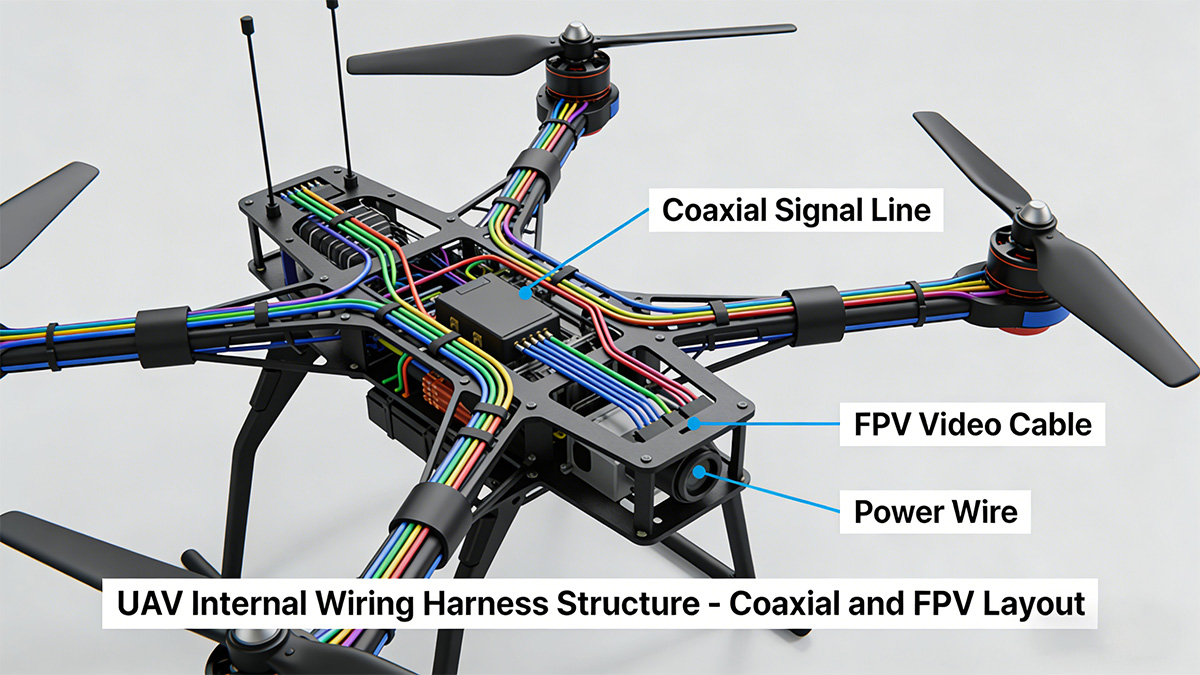
Think of a drone's coaxial cables as the nerve fibers of the aircraft. Not a metaphor engineers reach for loosely — when the signal line feeding a flight controller picks up interference because someone nicked the braided shielding during stripping, the platform doesn't just perform poorly. In regulated airspace, it fails compliance. That distinction matters more than most procurement checklists acknowledge.
FPV racers, commercial inspection UAVs, defense-grade surveillance systems — the common thread across all of them is a wiring harness that has to be both featherweight and interference-proof. The coaxial cables running video, telemetry, and GPS signals through that harness represent the most precision-sensitive processing step in the entire assembly sequence. And that's where most manual operations start bleeding yield without knowing why.
The global drone market hit USD 73.06 billion in 2024 and is on track toward USD 163.60 billion by 2030 — a 14.3% CAGR, per Grand View Research. As production volumes scale across Shenzhen, California, Germany, and beyond, coaxial cable harness processing has quietly become one of the tightest bottlenecks in UAV manufacturing. The CS-5507 automatic wire cutting and stripping machine — built specifically for multi-layer coaxial processing — addresses that bottleneck with 0.01mm stripping precision, 10-layer capability, and 99-program storage in a footprint that fits on a standard assembly bench.
Understanding Drone Wiring Harness Requirements
Drone wiring harnesses don't get enough credit for their complexity. A single commercial UAV platform might pack six distinct cable categories — power, signal, data, RF, motor, and video — into a total weight budget with zero tolerance for oversized connectors, redundant insulation, or rework loops. Coaxial signal lines and video transmission cables sit at the top of that complexity stack, imposing strip quality requirements that are unforgiving even on a good production day.
Coaxial Cable Types Used in UAV Harnesses
UAV systems depend on micro-coaxial cable for their most signal-critical connections — and the margins for error at this scale are genuinely thin:
- RG-178 and RG-316 — FPV video feeds, telemetry links, GPS receiver connections; outer diameters between 1.8mm and 4.0mm. A single nick to the dielectric or braided shield at this scale is a reject, full stop
- Shielded video lines — HD camera gimbals and thermal imaging payloads need impedance-matched coaxial connections to transmit uncompressed video without artifact injection or signal loss along the cable run
- RF transmission lines — BVLOS communication systems run tightly toleranced coaxial feeds where stripping length deviation directly degrades RF connector termination quality at SMA, MMCX, and U.FL interface points
Why Strip Precision Determines Assembly Yield
Here's the thing about coaxial cable structure: every layer — outer jacket, braided shielding, dielectric, center conductor — is a distinct failure point during stripping. A depth error of just 0.5mm at the braid layer exposes the dielectric to contamination or mechanical stress. At the center conductor, an over-strip that grazes the conductor surface creates damage that prevents clean connector seating — a root cause that surfaces at termination inspection but rarely gets traced back to the stripping station in standard defect reporting.
Your line operators know the frustration of flagging a connector termination failure that nobody can explain. Often, the stripping step is where the damage happened — it just didn't show up until three stations later.
CS-5507 Coaxial Wire Cutting Stripping Machine: Full Specifications
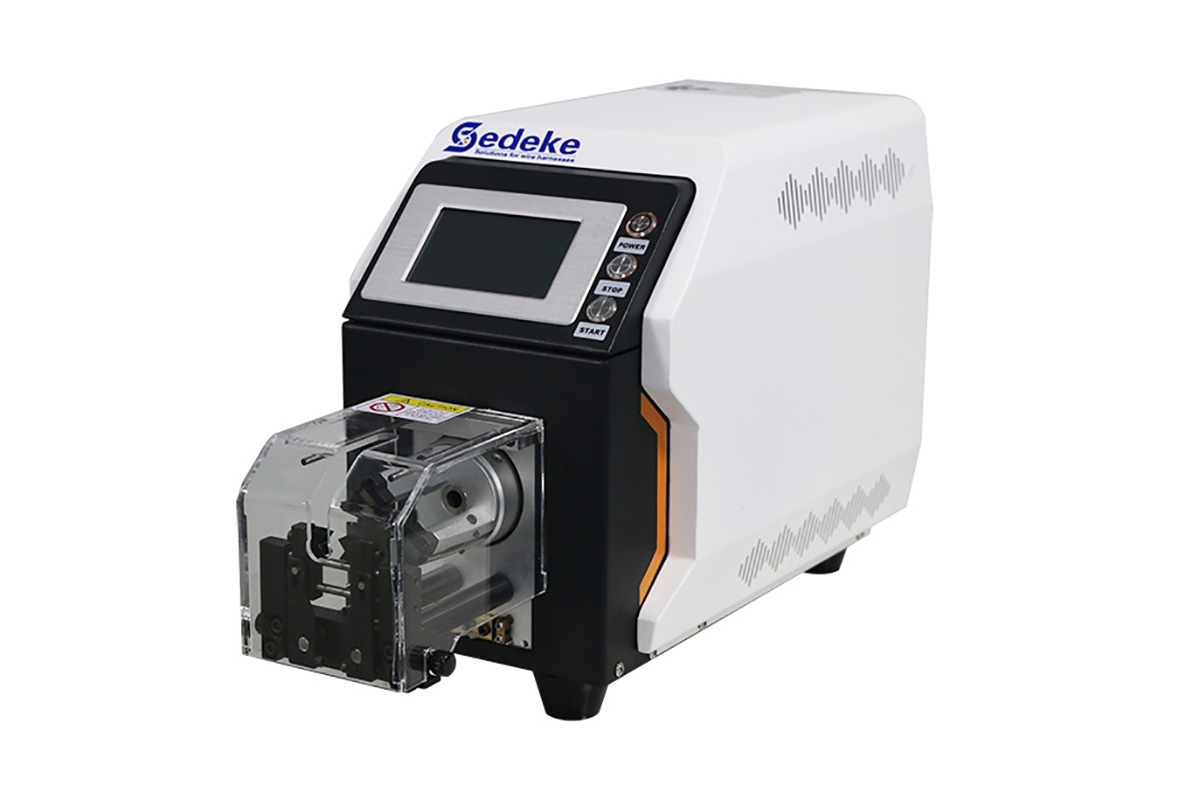
Rather than positioning the CS-5507 as a universal solution, it's more accurate to describe it as a machine engineered for a specific class of problem: precision multi-layer stripping of coaxial and shielded cables in production environments where depth consistency across thousands of cycles is non-negotiable. Its specs map cleanly to UAV harness processing requirements — which is why it shows up repeatedly in Shenzhen harness shops running FPV and BVLOS cable programs.
| Parameter |
CS-5507 Value |
| Dimensions |
580*188*285mm |
| Weight |
24KG |
| Max Processing diameter |
7 mm |
| Max. stripping length |
55mm |
| Min. stripping length |
0.1mm |
| Max. stripping layers |
10 layers |
| Cutting length unit |
0.01mm |
| Drive way |
Ball screw drive |
| Blade Material |
imported tungsten steel |
| Program Storage |
Max. 99 programs can be saved |
| Startup mode |
Manual / Pedaling(Optional) |
| Power |
220V 50/60HZ |
Capability 1 — 0.01mm Precision for Micro-Coaxial Processing
The ball screw drive — a mechanism that converts motor rotation into tightly controlled linear blade movement via a recirculating ball-and-screw assembly — is what gives the CS-5507 its watchmaker's tolerance of 0.01mm incremental depth accuracy. For RG-178 with an OD of roughly 1.8mm, that means blade depth can be dialed in within a fraction of the dielectric wall thickness. Is 0.01mm overkill for consumer-grade FPV cable? For commercial surveying or defense payload applications, it's barely sufficient. The difference between a clean center conductor exposure and a scrapped connector termination often lives entirely in that margin.
Manual stripping of cables at sub-2mm diameter produces depth variance that experienced harness engineers recognize as a consistently observable root cause of termination failures on drone production lines. The CS-5507 eliminates that variance mechanically, not through operator discipline.
Capability 2 — 10-Layer Stripping for Complex Shielded Structures
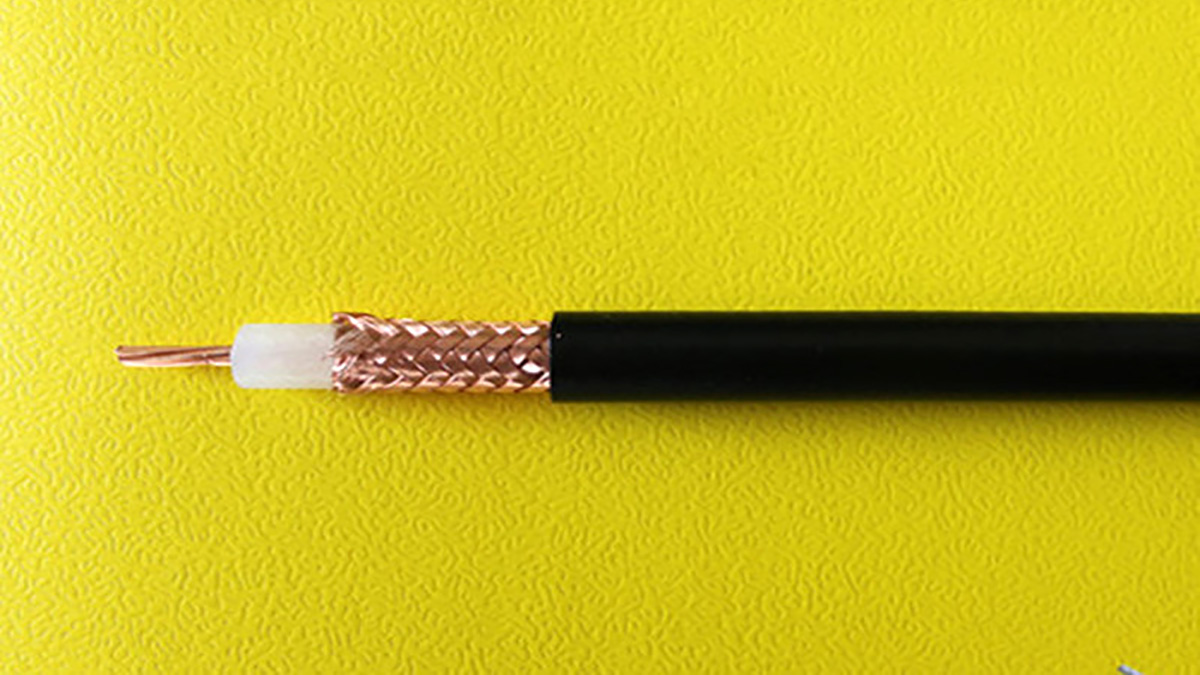
Double-shielded and triple-shielded cable constructions are no longer exotic — they're increasingly standard in RF-dense UAV platforms where EMI rejection requirements have tightened. The CS-5507 chews through up to 10 stripping layers in a single automatic cycle, walking through each structural layer — outer jacket, braided shield, foil shield, dielectric, center conductor — in one programmed sequence without re-fixturing. For military-grade harnesses and high-data-rate imaging cables, that multi-layer consistency is what separates acceptable connector yield from rework-heavy batch processing.
Capability 3 — 8mm Diameter Range and 55mm Strip Length
The 8mm maximum diameter covers the practical range of coaxial cables used across commercial and industrial UAV applications — from RG-178 at 1.8mm OD through RG-316 at approximately 2.5mm, standard RG-58 at 5mm, and into the larger-diameter signal bundles used in heavy-lift platforms. The 55mm maximum stripping length accommodates the exposed-conductor requirements for SMA, MMCX, and U.FL RF connectors — standard interface types across UAV RF subsystems. In most production environments, that range handles the full harness BOM without needing a secondary machine.
Capability 4 — Imported Tungsten Steel Blades
Tungsten carbide-tipped tool steel holds its cutting edge across extended high-cycle runs where softer blade materials deflect and lose calibration. That matters specifically in coaxial cable processing, where consistent blade depth across tens of thousands of cycles is the primary driver of batch quality. Softer blades don't fail dramatically — they drift. And a blade that's drifted 0.1mm on a 1.8mm cable is already generating rejects that won't surface until connector termination inspection. The tungsten steel blades in the CS-5507 directly reduce that blade-induced depth variance — a commonly observed contributor to braid-damage scrap in high-volume FPV cable manufacturing.
Regional Market Insights: Where Drone Manufacturing Thrives
The USD 163.60 billion trajectory by 2030 masks something important: UAV production isn't spreading uniformly. Four regional clusters generate the majority of coaxial cable harness volume, each with different compliance requirements, different batch profiles, and different criteria for equipment selection.
China — Shenzhen and Dongguan
Having visited dozens of cable assembly shops across the Pearl River Delta, the production pressure is immediately tangible. China controls the dominant share of global drone component manufacturing, and the harness contractors clustered around Shenzhen are running multi-SKU programs under conditions that demand fast specification changeover and consistent process control across shifts. Export-bound assemblies from this region need to satisfy CE marking, FCC Part 15, and RoHS/REACH simultaneously — which means documented process control at the stripping stage isn't optional; it's an audit requirement. Asia led global drone flight activity in 2024 with 6.3 million flights, up 13% year-on-year — production volumes are tracking accordingly.
United States — California and Texas
North America held over 39% of the global drone market in 2024. California carries NDAA-compliant manufacturers including Skydio and Joby Aviation; Texas has built a meaningful base in defense and agriculture UAV production. The DFARS and ITAR frameworks governing US defense manufacturing impose traceability requirements that make the CS-5507's 99-program storage functionally significant — not just a convenience feature, but an audit-trail enabler in environments where production runs are documented to component level. FAA Part 107 compliance and the ongoing UTM standards evolution are pushing US manufacturers toward higher-specification platforms, which pulls harness quality standards upward with them.
Europe — Germany and France
The European drone market runs under EASA regulation and the EU U-Space framework. Germany is the largest European UAV manufacturing market, with commercial inspection and agriculture applications concentrated in Munich and Hamburg; France serves as a defense UAV production hub with harness assembly activity supporting major aerospace programs. CE conformity, EN wiring standards, and RoHS 3 (EU 2011/65/EU as amended) apply across European harness production — each requiring documented process control at cable stripping that a programmable automatic machine satisfies by design.
Israel
Israel's defense drone sector operates at a specification tier that leaves little room for equipment compromise. EO/IR payload and SIGINT system requirements mean signal integrity tolerances are non-negotiable — and the multi-layer shielded coaxial cables used in these harnesses demand exact depth control across mixed-diameter production runs. Equipment decisions in this supply chain are made on technical parameter match, not price point. The CS-5507's capability profile — 0.01mm precision, 10-layer capacity, tungsten carbide blade material — lands squarely in that requirement window.
ROI and Production Efficiency
The efficiency case for the CS-5507 isn't complicated. It comes down to two cost categories that manual coaxial stripping generates at scale: labor cost per cable end, and rework cost per stripping-induced reject. Check your current scrap rates. Now imagine halving them — not through operator retraining, but through mechanical depth consistency.
Automatic vs. Manual Processing: The Cycle Time Gap
Manual multi-layer coaxial stripping forces a skilled operator through four to seven sequential steps per cable end — outer jacket score and removal, braid trim, foil removal, dielectric strip, center conductor exposure — with each step subject to fatigue-driven variation as the shift progresses. For four-or-more-layer cables, cycle times of 45 to 90 seconds per end are a typical observed baseline in harness shops transitioning to automated coaxial processing. The CS-5507 runs the complete programmed stripping sequence in a single automatic cycle, reducing operator involvement to cable loading and output verification. That process model change compounds across a production shift in ways a simple cycle-time comparison understates.
99-Program Storage for Multi-SKU Drone Production
A commercial UAV harness typically specifies 8 to 15 distinct coaxial cable types within a single build — each with a different outer diameter, stripping length sequence, and layer depth profile. Storing the complete cable library for a drone platform — or across multiple platforms — in 99 discrete programs means changeover between cable types is a recall operation, not a reprogramming exercise. For multi-model UAV harness contracts where batch sizes are small and SKU count is high, that changeover compression is where a meaningful share of the efficiency gain quietly lives.
Material Efficiency Through Precision Depth Control
At 0.01mm depth resolution, the CS-5507 eliminates the strip-length safety margins that manual operators add to avoid under-stripping — a practice that wastes exposed conductor length and can force connector re-termination on high-value RF cable assemblies. Precision stripping to nominal depth removes this margin requirement, contributing to measurable cable material saving per unit across high-volume drone coaxial cable assembly production runs. For production lines requiring complementary wire processing capability, the
EC-805 Automatic Cable Cutting Machine or
EC-810 Automatic Cable Cutting Machine provides upstream cutting process directly compatible with the CS-5507 process sequence, while the
TM-20S Automatic Wire Terminal Crimping Machine and
ET-12 Wire Twisting Machine provide downstream crimping and twisting processes directly compatible with the CS-5507 process sequence, extending processing coverage to standard insulated wire specifications in complete UAV harness construction.
For applications requiring high output, production line integration, and automated processing, the
PF-820 Wire Prefeeding Machine,
CS-9685 Coaxial Cable Cutting and Stripping Machine and
CS-9680 Automatic Coaxial Cable Stripping Machine can be used together to form a complete automated processing line that is efficient, stable, and of high quality, significantly improving processing efficiency and product consistency.
Matching Stripping Precision to UAV Production Scale
Drone cable assembly has passed the threshold where manual coaxial stripping is a viable process model — not because operators lack skill, but because multi-layer coaxial structures require depth control and cycle-to-cycle consistency that no human hand can sustain across high-volume production runs. That's not a criticism of operators; it's a statement about the geometry of the cable. The CS-5507 addresses the three specific failure modes that manual stripping introduces into UAV harness production: depth variance at the dielectric layer, braid damage from inconsistent blade pressure, and extended cycle time on multi-layer strip sequences.
For UAV manufacturers and wire harness subcontractors evaluating precision coaxial stripping equipment, the CS-5507 specification sheet, stripping layer configuration guides, and application data are available directly from Sedeke.
Visit the CS-5507 product page for complete technical documentation, or reach the Sedeke technical team at
sales@sedeke.com with your cable diameter range, stripping layer count, and target throughput rate. They'll prepare an equipment selection response based on your actual line parameters — not a generic brochure.

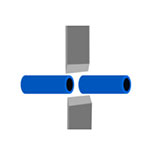 EC-6100 Automatic Heat Shrink Tube Cutting Machine EC-6800 Automatic Cutting Machine EC-6100H Automatic Hot Cutting Machine EC-830 Corrugated Tube Cutting Machine EC-6500 Automatic Cable and Tube Cutting Machine EC-810 Automatic Cable Cutting Machine EC-850X Automatic Rotary Cutting Machine EC-821 Corrugated Tube Cutting Machine EC-890 Multifunctional Automatic Cutting Machine EC-870 High-power Automatic Tube Cutting Machine EC-816 Automatic Cutting Machine EC-823 High Speed Cutting Machine EC-805 Automatic Cable Cutting Machine EC-860 Corrugated Tube Cutting Machine EC-830F Automatic Tube Cutting Machine With Feeding System EC-830FS Tube Cutting Machine With Feeding System EC-3100 Automatic Cable and Tube Cutting Machine
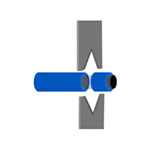 CS-BT802 Automatic Shield Braid Brushing & Twisting Machine CS-2023T Automatic Coaxial Cable Stripping Machine CS-0520 Semi-Automatic Coaxial Cable Stripping Machine CS-4507/6010 Multifunctional Wire Stripping Machine UniStrip 2016 Pneumatic Wire Stripping Machine UniStrip 2018E Electric Cable Wire Stripping Machine CS-5507 Automatic Coaxial Cable Stripping Machine CS-5515 Automatic coaxial cable stripping machine CS-400 Braided Shield Cable Stripping Machine CS Series Rotary Cable Stripping Machine CS-2486 Coaxial Cable Wire Stripping Machine
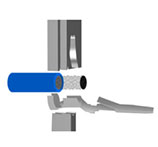 TM-P01 Terminal Crimping Machine TM-20 Terminal Crimping Machine TM-20S Automatic Wire Terminal Crimping Machine TM-200 Terminal Crimping Machine TM-10P Registered Jack Crimping Machine TM-E140 Pre-insulation Ferrule Terminal Strip And Crimp Machine TM-E140S Automatic Wire Stripping Ferrule Crimping Machine TM-P300 Pneumatic Terminal Crimping Machine TM-E116 Electric Terminal Crimping Machine TM-P120 Pneumatic Terminal Crimping Machine SAT-AS6P Pneumatic Crimping Applicator SAT-MS6 Mechanical Crimping Applicator Side Feed Terminal Crimping Applicator Rear Feed Terminal Crimping Applicator Hexagonal Terminal Crimp Applicator Flag Terminal Crimping Applicator Crimp Applicator for Insulated Terminals TM-T Series Intelligent Servo Terminal Crimping Machine SAT-MS5 OTP Mechanical Applicator TM-25M Automatic Terminal Crimping Machine
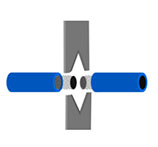 ESC-BX4 Wire Cutting And Stripping Machine ESC-BX30 Automatic Large Cable Cutting and Stripping Machine ESC-BX30S Sheathed Cable Automatic Cutting and Stripping Machine ESC-BXR Automatic Rotary Cable Stripping Machine ESC-BX6 Wire Cutting And Stripping Machine ESC-BX7 Wire Cutting And Stripping Machine ESC-BX8S Sheath Cable Cutting and Stripping Machine ESC-BX8PR Wire Cutting And Stripping Machine ESC-BX9 Automatic Cut and Strip Machine ESC-BX30SC Automatic Cable Wire Cutting and Stripping Machine ESC-BX120 Automatic Cutting and Stripping Machine ESC-BX30RS Multi-function Rotary Cable Stripping Machine ESC-BX120S Multi-core Cable Cutting and Stripping Machine ESC-BX60 Automatic Cable Cutting and Stripping Machine CS-9685 Coaxial Cable Cutting and Stripping Machine CS-9680 Automatic Coaxial Cable Stripping Machine ESC-BX300 Automatic Cable Wire Cutting And Stripping Machine ESC-BX16 Wire Cutting Stripping Machine ESC-BX20SF Flat Twin Wire Cutting and Stripping Machine ESC-BZ06 Wire Cutting Stripping and Bending Machine
 ACC-101 Automatic Single-head Terminal Crimping Machine ACC-102A Fully Automatic Terminal Crimping Machine (Both Ends) ACC-102B Automatic Double Terminal Crimping Machine ACC-105 Fully Automatic Single-head End-dipping Tin Machine ACC-106 Fully Automatic 5-Wire Single-head End-dipping Tin Machine ACC-202UP Fully-automatic cut,strip,crimp,insert and Heat Heat-shrink tube machine ACC-308 (Both ends) Full automatic Soldering machine ACC-208 Fully Automatic Crimping Machine (Both Ends) ACC-508 Fully Automatic Twisting, Soldering and Crimping Machine ACC-608 Fully Automatic Flat Cable Cut Strip and Crimp Machine
 HSM-60 Heat Shrink Tube Processing Machine HSM-70 Heat Shrink Tube Processing Machine HSM-80B Heat Shrink Tube Processing Machine HSM-90 Heat Shrink Tube Processing Machine HSM-25M Heat Shrink Tube Processing Machine HSM-120 Heat Shrink Tube Heating Machine HSM-50 Heat Shrink Tube Processing Machine HSM-160 Heat Shrink Tube Processing Machine HSM-80A Heat Shrink Tube Heating Machine HSM-260E Enclosed Heat Shrink Tube Processing Machine HSM-260O Open Heat Shrink Tube Processing Machine HSM-20 Intelligent Heat Shrink Tube Processing Machine
 HV-CS 9070 High-Voltage Cable Shield Cutting Machine HV-FS 9053 Cable Shield Folding Machine HV-ACS 9100 Cable Shield Processing Machine HV-ACS 9200 Automatic Cable Shield Processing System HV-ACS 9300 Automotive High Voltage Cable Processing Machine HV-ACS 9500 High Voltage Cable Processing Machine HV-FC 9312 Aluminum Foil Cutting Machine HV-CS 9120 Cable Stripping Machine
 STB-10 Automatic Tape Bundling Machine STB-50 Desktop Bundling Machine STB-60 Adhesive Tape Bundling Machine STB-55 Desktop Tape Bundling Machine STB-50C Automatic Tape Cutting Machine STP-B Hand-held Taping Machine STP-F Hand-held Lithium Battery Tape Wrapping Machine STP-C Automatic Wire Taping Machine STP-D Automatic Tape Wrapping Machine STP-AS Automatic Tape bundling Machine
 CB-B15 Automatic Wire Winding Machine CB-BT15 Automatic Wire Winding Binding Machine CB-F30/CB-F150 Series Automatic Wire Winding Machine CB-FT314/CB-FT1514 Automatic Wire Winding Binding Machine CB-FT348/1548 Automatic Wire Winding Binding Machine CB-B15CST Automatic Wire Coiling Binding Machine CB-F500 Automatic Wire Winding Machine CB-B30/150CS Automatic Wire Winding Machine CB-B10/15CS Automatic Wire Winding Machine CB-WT630 Automatic Wire Winding and Tying Machine
 PF-820 Wire Prefeeding Machine PF-08 Automatic Wire Prefeeder PF-30 Automatic Prefeeding Machine PF-60 Automatic Prefeeding Machine PF-150 Automatic Wire Prefeeding Machine CC-380 Cable Coiling Machine CC-680 Automatic Cable Coiling Machine CC-380D Cable Coil Machine PF-120 Large Automatic Wire Prefeeding Machine PF-90 Automatic Wire Prefeeder PF-100 Automatic Prefeeder PF-04 Automatic Wire Prefeeder PF-06 Automatic Wire Prefeeder PF-05 Automatic Wire Prefeeder
 CHM-402 Crimp-Height Measurer CHM-10 Crimp-Height Measurer PFM-220 Terminal Pulling Force Tester PFM-300 Terminal Pulling Force Tester PFM-200 Pull Force Tester For Wire Terminals TCA-120 Terminal Cross Section Analyzer TCA-120S Terminal Cross Section Analyzer TCA-150 Terminal Cross Section Analyzer PFM-50 Pull Force Measuring Machine