Applications of fiber optic harnesses in automobiles
With the rapid development of the automotive industry, the complexity of automotive electronic systems is constantly increasing, and the requirements for communication systems are becoming increasingly stringent. Fiber optic harnesses, as an advanced signal transmission carrier, are being used more and more widely in the automotive industry. Fiber optics, with its advantages of high speed, high reliability, low loss, and resistance to electromagnetic interference, is gradually changing the way data is transmitted in automobiles, demonstrating enormous application potential in the field of automotive communication. This article discusses the basic characteristics of fiber optic harnesses and their applications in automobiles, analyzing their advantages and development prospects.
With the increasing intelligence and connectivity of automotive technology, the demand for communication and data transmission is growing, making the security and stability of in-vehicle electronic communication systems a key research focus. Fiber optic communication technology, as an advanced communication technology, provides new ideas for the development of in-vehicle electronic communication systems. This paper analyzes the characteristics of fiber optic communication technology, examines its applications in future automobiles from multiple perspectives, explores its advantages, and forecasts its development trends.
1.Technical Overview of Fiber Optic Harnesses
Fiber optic cables use light waves as carriers and optical fibers as the transmission medium, offering advantages such as high speed, high reliability, low loss, and resistance to electromagnetic interference. Their transmission rates are far higher than traditional copper wires or coaxial cables, meeting the high-volume, real-time communication requirements of in-vehicle systems. The fiber optic communication link primarily consists of optical connectors and fiber optic carriers to achieve high-speed signal transmission.
①Fiber Optic Connector
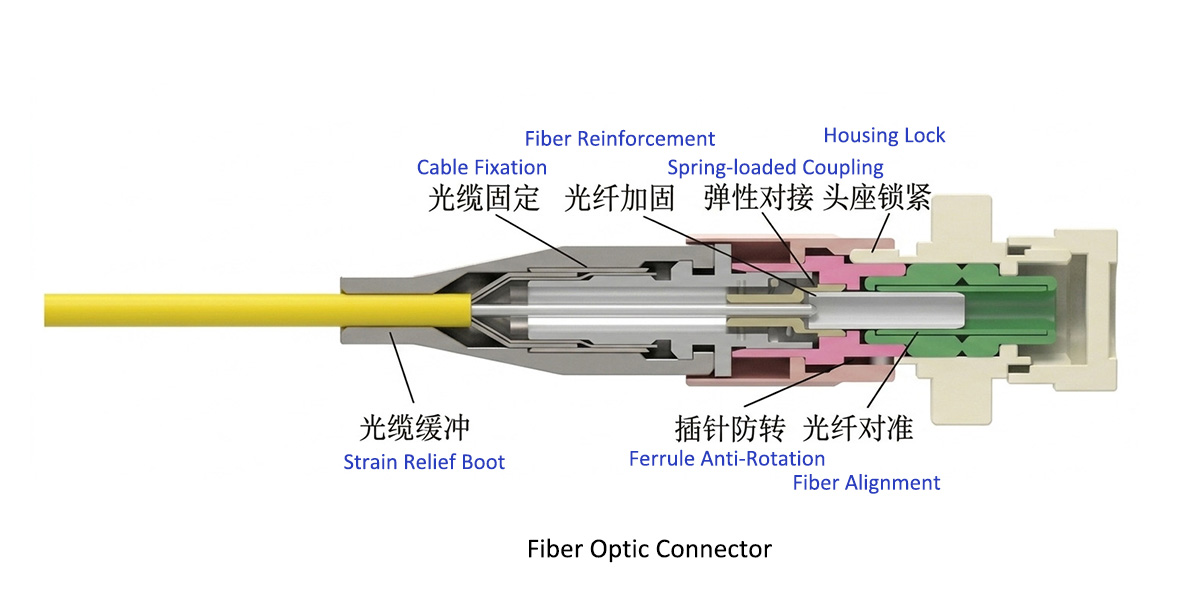
Fiber optic connectors are passive optical devices that enable movable connections between optical fibers. They mainly consist of fiber reinforcement, fiber alignment, flexible mating, connector locking, cable fixation, ferrule anti-rotation, and cable buffering (see Figure 1). Fiber optic connectors typically use ceramic ferrules and ceramic sleeves for fiber alignment, with springs ensuring flexible mating of the ferrule ends. Before mating, the spring is in a pre-compressed state, preventing the ferrule from moving due to locking force. During mating, the ferrule retraction generates secondary compression, feeding back the spring force to the ferrule, ensuring that the two mating ferrules remain in contact and pressed together throughout the mating process.
②Optical fiber conductor
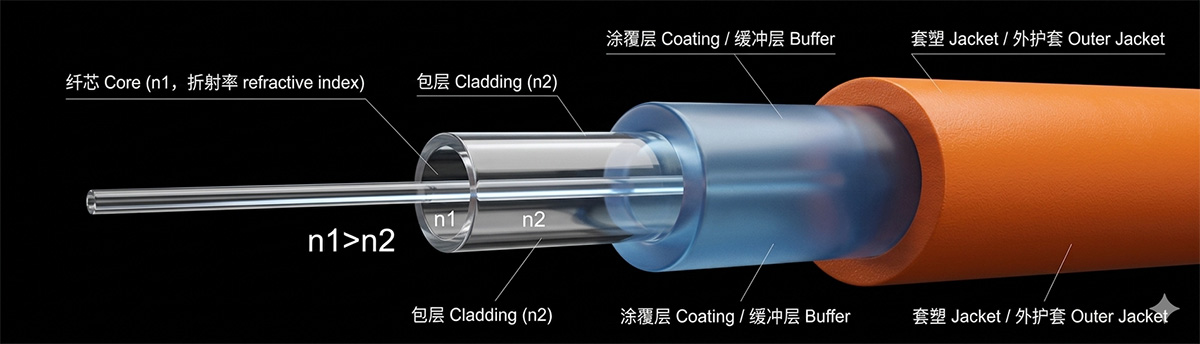
Optical fibers are cylindrical and mainly consist of a core, cladding, and coating (see Figure 2). The transmission principle of optical fibers utilizes the phenomenon of total internal reflection. That is, when light is incident from an optically denser medium (with a relatively high refractive index) to an optically less dense medium (with a relatively low refractive index), if the angle of incidence is greater than the critical angle for total internal reflection, the light will no longer be refracted, but will be completely reflected back into the original medium, ensuring that the optical signal can propagate in the optical fiber without leakage.
Optical fiber has the following characteristics:
(1) High transmission speed, long distance, and high content: Optical fiber has a very high transmission speed, can transmit data over long distances, and can transmit a large amount of data at the same time.
(2) Not affected by electromagnetic interference: Optical fiber transmits optical signals and is not affected by electromagnetic waves, so the signal quality is more stable.
(3) Wide bandwidth: Optical fiber has a very wide bandwidth, which can support high-speed data transmission.
(4) Low loss: The transmission loss of optical fiber is very low, and theoretically it can transmit hundreds of kilometers or even longer distances without loss of signal quality.
(5) High security: Optical fiber transmission does not generate electromagnetic radiation and cannot be eavesdropped by external electromagnetic waves, so it is more suitable for some scenarios with high data security requirements.
(6) Small size and light weight: Compared with traditional copper cables, optical fiber is smaller and lighter, making it easier to deploy and maintain. This advantage is even more obvious in large-scale communication networks.
2.Advantages of fiber optic harnesses in intelligent automotive applications
When the transmission rate of copper wires reaches 10GB/s or more, thicker copper wires will be needed to meet the rate requirements. However, in the automotive layout environment, the thickening of copper wires leads to an increase in the weight of the vehicle and the cost of the vehicle, which cannot meet the requirements of the high-speed and low-weight layout environment of the vehicle. Fiber optic cable technology can significantly improve communication quality and reliability and reduce electromagnetic interference without adding extra weight, thus improving the safety and stability of the vehicle.
(1) The transmission rate of fiber optic cable is much higher than that of traditional copper wires or coaxial cables. It can transmit millions of megabytes of data per second, which can meet the communication needs of modern automobiles for large data volume and high real-time performance. The highest speed of traditional copper wire networks can only reach 10GB/s, which is difficult to meet the requirements of high-speed transmission.
(2) The transmission loss of optical fiber is extremely low. The loss per kilometer is usually less than 0.0035 dB/m, which can ensure that the signal maintains a high quality during long-distance transmission. In contrast, the transmission loss of traditional copper wire networks is 0.5 dB/m, which is large during long-distance transmission.
(3) Optical fiber communication technology uses light waves to transmit signals in optical fibers, which has significant immunity to electromagnetic interference compared to traditional copper wire transmission.
(4) Compared with traditional metal wires, plastic optical fiber (POF), as a type of automotive optical fiber, can significantly reduce vehicle weight and improve vehicle economy.
3.Application scenarios of fiber optic harnesses in automobiles
Fiber optic harnesses are currently widely used in the fields of medicine, communications, the Internet, and industry. However, their application in the automotive field faces several challenges, including a lack of basic theoretical foundations, technical specifications and standards, unclear testing standards, and a lack of practical experience in automotive applications.
①Application of fiber optic cable bundles in deployment areas
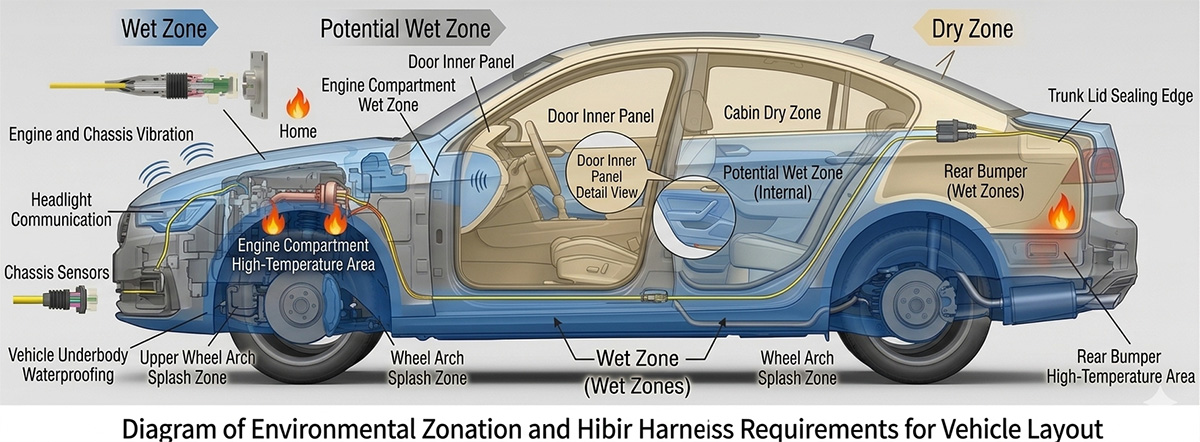
The use of fiber optic harnesses in automobiles differs from that in other fields, and the environmental characteristics of the area of use must be fully considered. For example, vibration requirements are involved in areas such as the engine and chassis; waterproof performance needs to be considered in areas such as the engine compartment and undercarriage; and high-temperature performance requirements of fiber optic conductors and connectors need to be considered in high-temperature areas. According to the different usage environments of automobiles, the layout areas of the whole vehicle can be roughly divided into wet areas, potentially wet areas and dry areas.
(1) Wet areas refer to areas where wires and connectors are likely to come into contact with liquids in normal usage scenarios, such as harness connectors in areas outside the passenger compartment such as the chassis and engine compartment. In rainy or snowy weather, these areas will come into contact with various liquids to some extent, whether during driving or when parked.
(2) Potentially wet areas refer to areas where harness connectors may come into contact with liquids in certain daily usage scenarios, such as when doors are opened in the rain, water cups are spilled, frozen items melt, or condensation drips. For example, passenger compartment floor, door armrests, seat surfaces, etc.
(3) Absolutely dry areas refer to areas where the wiring harness connectors are unlikely to come into contact with liquids under normal vehicle use scenarios, such as the interior of the dashboard and the interior of the headliner. It should be noted that the waterproof sealing requirements for wiring harness connectors decrease sequentially from wet areas, potentially wet areas to dry areas.
②Fiber optic harness application solutions
In addition to meeting electrical performance requirements, the application of fiber optic cables in automobiles often requires meeting mechanical performance requirements. It is necessary to consider the temperature rating, vibration requirements, and waterproof requirements of the fiber optic cables. The solutions are as follows:
(1) Fiber optic cables: First, heat dissipation design is carried out by selecting high-temperature resistant materials and optimizing the overall vehicle layout. For example, high-temperature resistant wire materials such as silicone wire and XLPE wire are selected. These materials can maintain insulation in high-temperature environments. Second, special processes are used, such as double-layer coating and ultraviolet curing technology. Finally, the layout in the vehicle is optimized.For example, the wiring harness layout avoids the engine exhaust pipe path and high-temperature vortex area. A more optimized layout is obtained through thermal management.
At the same time, high-temperature resistant heat insulation wrapping can also be used in the vehicle wiring layout.For example, high-temperature resistant aluminum foil fiberglass tube is used to wrap the outside of the fiber optic cable, which can effectively ensure the use of fiber optic cables in high-temperature environments in vehicles and improve aging resistance.
At the same time, in order to ensure that fiber optic cables can be used in humid environments, the optical cable can also be designed with a multi-layer protective structure to effectively waterproof. Specifically, the outermost layer of the optical cable is usually a plastic sheath. This sheath not only provides mechanical protection but also has a certain waterproof function. Inside the plastic sheath is a metal jacket, which further enhances the optical cable's pressure resistance and waterproofing capabilities. Within the metal jacket is a water-swellable barrier layer, a crucial barrier against moisture penetration. If moisture does intrude, the barrier layer rapidly expands, sealing the intrusion path and preventing further spread. The cable core also incorporates waterproofing measures. The optical fiber is tightly wrapped in grease and bonded to other components within the core. This grease not only lubricates but, more importantly, absorbs and locks in trace amounts of moisture within the core, preventing damage to the fiber.
Through this multi-layered protective structure, the optical cable can maintain the dryness and stability of the fiber in various harsh environments, ensuring smooth transmission of communication signals. For example, the quartz multimode fiber in the automotive optical harness solution released by Yangtze Optical Fibre and Cable meets automotive-grade standards in terms of bending (radius 10 mm), tensile strength (150 N), temperature characteristics (-40 ℃~125 ℃), aging (125 ℃, 3000 h), and vibration (V3).
(2) Fiber Optic Connectors: The main methods to improve the temperature resistance of fiber optic connectors include designing heat dissipation structures and selecting high-temperature resistant materials. Through reasonable heat dissipation design and the use of high-temperature resistant materials, the performance and lifespan of fiber optic connectors in high-temperature environments can be effectively improved. First, designing a heat dissipation structure is key to improving the temperature resistance of fiber optic connectors. Fiber optic connectors generate heat during operation; a reasonable heat dissipation design can help reduce the connector's temperature and ensure its stable operation.
Here are the specific methods:
① Reserve metal components to transfer heat and aid in heat dissipation.
② Design heat dissipation fins: Incorporate heat dissipation fins into the connector shell to allow for better air contact and heat dissipation through fans or natural wind.
③ Use a metal shell: Employ metal materials with better heat dissipation performance to improve heat dissipation efficiency. Secondly, selecting high-temperature resistant materials is also crucial for improving the temperature resistance of fiber optic connectors.
Ordinary materials are prone to aging or deformation in high-temperature environments, while high-temperature resistant materials are better able to withstand the effects of high temperatures.
① High-quality engineering plastics: Use high-quality engineering plastics resistant to medium and low temperatures to construct the connector shell and internal structure, improving overall temperature resistance.
② Special alloy materials: Use special alloy materials to construct key components of the connector, enhancing their high-temperature resistance and deformation resistance. For example, Lytas Optics offers non-contact optical connectors, which feature higher mating repeatability, longer mating life, lower mating loss, and lower dust sensitivity compared to traditional optical connectors.
③ Heat shrink tubing can be used for waterproofing: Apply heat shrink tubing to the connection area and use a heat shrink tubing heater to shrink the tubing. The function of heat shrink tubing is to protect optical fibers and prevent moisture and contaminants from entering. Ensure that the heat shrink tubing fits tightly against the connector and optical fiber without gaps. Apply an appropriate amount of sealant to the outside of the heat shrink tubing to enhance the waterproof performance of the connector. Ensure that the sealant is applied evenly and fills all possible gaps and pores, wait for the sealant to dry and harden, and then perform sealing treatment.
(3) High-speed connection is achieved through optical fiber, and the electrical connection port is responsible for powering the sensor. In summary, optical fiber communication technology has broad application prospects and great potential in vehicle communication systems. In the future, optical fiber communication technology will continue to leverage its unique advantages and provide strong support for the development of vehicle electronic communication systems. At the same time, with the continuous progress and innovation of technology and the continuous improvement of scale, the cost of optical fiber communication in vehicle applications will be further reduced, the solutions will become more mature, and it will become the preferred solution for solving the high-speed communication needs in the development of intelligent vehicles.
4.Conclusion
The development of intelligent vehicles places demands on communication systems, requiring high speed, low loss, and strong interference resistance. Compared to automotive copper wires, fiber optic communication wires offer several advantages. This paper briefly analyzes the application scenarios of fiber optic bundles and corresponding solutions. With the development of intelligent vehicles, automotive fiber optics will be widely used in automobiles.
(Source: [1] Automotive Knowledge. 2024, 24 (11), Author: Jian Zhongjian, Liu Zhiqiang, Wang Dengke. GAC Group Automotive Engineering Research Institute
[2] Wiring Harness China. 2026, 5)

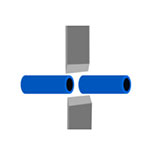 EC-6100 Automatic Heat Shrink Tube Cutting Machine EC-6800 Automatic Cutting Machine EC-6100H Automatic Hot Cutting Machine EC-830 Corrugated Tube Cutting Machine EC-6500 Automatic Cable and Tube Cutting Machine EC-810 Automatic Cable Cutting Machine EC-850X Automatic Rotary Cutting Machine EC-821 Corrugated Tube Cutting Machine EC-890 Multifunctional Automatic Cutting Machine EC-870 High-power Automatic Tube Cutting Machine EC-816 Automatic Cutting Machine EC-823 High Speed Cutting Machine EC-805 Automatic Cable Cutting Machine EC-860 Corrugated Tube Cutting Machine EC-830F Automatic Tube Cutting Machine With Feeding System EC-830FS Tube Cutting Machine With Feeding System EC-3100 Automatic Cable and Tube Cutting Machine
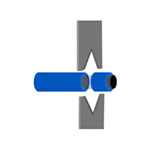 CS-BT802 Automatic Shield Braid Brushing & Twisting Machine CS-2023T Automatic Coaxial Cable Stripping Machine CS-0520 Semi-Automatic Coaxial Cable Stripping Machine CS-4507/6010 Multifunctional Wire Stripping Machine UniStrip 2016 Pneumatic Wire Stripping Machine UniStrip 2018E Electric Cable Wire Stripping Machine CS-5507 Automatic Coaxial Cable Stripping Machine CS-5515 Automatic coaxial cable stripping machine CS-400 Braided Shield Cable Stripping Machine CS Series Rotary Cable Stripping Machine CS-2486 Coaxial Cable Wire Stripping Machine
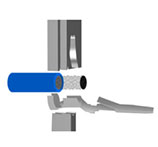 TM-P01 Terminal Crimping Machine TM-20 Terminal Crimping Machine TM-20S Automatic Wire Terminal Crimping Machine TM-200 Terminal Crimping Machine TM-10P Registered Jack Crimping Machine TM-E140 Pre-insulation Ferrule Terminal Strip And Crimp Machine TM-E140S Automatic Wire Stripping Ferrule Crimping Machine TM-P300 Pneumatic Terminal Crimping Machine TM-E116 Electric Terminal Crimping Machine TM-P120 Pneumatic Terminal Crimping Machine SAT-AS6P Pneumatic Crimping Applicator SAT-MS6 Mechanical Crimping Applicator Side Feed Terminal Crimping Applicator Rear Feed Terminal Crimping Applicator Hexagonal Terminal Crimp Applicator Flag Terminal Crimping Applicator Crimp Applicator for Insulated Terminals TM-T Series Intelligent Servo Terminal Crimping Machine SAT-MS5 OTP Mechanical Applicator TM-25M Automatic Terminal Crimping Machine
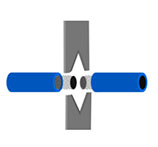 ESC-BX4 Wire Cutting And Stripping Machine ESC-BX30 Automatic Large Cable Cutting and Stripping Machine ESC-BX30S Sheathed Cable Automatic Cutting and Stripping Machine ESC-BXR Automatic Rotary Cable Stripping Machine ESC-BX6 Wire Cutting And Stripping Machine ESC-BX7 Wire Cutting And Stripping Machine ESC-BX8S Sheath Cable Cutting and Stripping Machine ESC-BX8PR Wire Cutting And Stripping Machine ESC-BX9 Automatic Cut and Strip Machine ESC-BX30SC Automatic Cable Wire Cutting and Stripping Machine ESC-BX120 Automatic Cutting and Stripping Machine ESC-BX30RS Multi-function Rotary Cable Stripping Machine ESC-BX120S Multi-core Cable Cutting and Stripping Machine ESC-BX60 Automatic Cable Cutting and Stripping Machine CS-9685 Coaxial Cable Cutting and Stripping Machine CS-9680 Automatic Coaxial Cable Stripping Machine ESC-BX300 Automatic Cable Wire Cutting And Stripping Machine ESC-BX16 Wire Cutting Stripping Machine ESC-BX20SF Flat Twin Wire Cutting and Stripping Machine ESC-BZ06 Wire Cutting Stripping and Bending Machine
 ACC-101 Automatic Single-head Terminal Crimping Machine ACC-102A Fully Automatic Terminal Crimping Machine (Both Ends) ACC-102B Automatic Double Terminal Crimping Machine ACC-105 Fully Automatic Single-head End-dipping Tin Machine ACC-106 Fully Automatic 5-Wire Single-head End-dipping Tin Machine ACC-202UP Fully-automatic cut,strip,crimp,insert and Heat Heat-shrink tube machine ACC-308 (Both ends) Full automatic Soldering machine ACC-208 Fully Automatic Crimping Machine (Both Ends) ACC-508 Fully Automatic Twisting, Soldering and Crimping Machine ACC-608 Fully Automatic Flat Cable Cut Strip and Crimp Machine
 HSM-60 Heat Shrink Tube Processing Machine HSM-70 Heat Shrink Tube Processing Machine HSM-80B Heat Shrink Tube Processing Machine HSM-90 Heat Shrink Tube Processing Machine HSM-25M Heat Shrink Tube Processing Machine HSM-120 Heat Shrink Tube Heating Machine HSM-50 Heat Shrink Tube Processing Machine HSM-160 Heat Shrink Tube Processing Machine HSM-80A Heat Shrink Tube Heating Machine HSM-260E Enclosed Heat Shrink Tube Processing Machine HSM-260O Open Heat Shrink Tube Processing Machine HSM-20 Intelligent Heat Shrink Tube Processing Machine
 HV-CS 9070 High-Voltage Cable Shield Cutting Machine HV-FS 9053 Cable Shield Folding Machine HV-ACS 9100 Cable Shield Processing Machine HV-ACS 9200 Automatic Cable Shield Processing System HV-ACS 9300 Automotive High Voltage Cable Processing Machine HV-ACS 9500 High Voltage Cable Processing Machine HV-FC 9312 Aluminum Foil Cutting Machine HV-CS 9120 Cable Stripping Machine
 STB-10 Automatic Tape Bundling Machine STB-50 Desktop Bundling Machine STB-60 Adhesive Tape Bundling Machine STB-55 Desktop Tape Bundling Machine STB-50C Automatic Tape Cutting Machine STP-B Hand-held Taping Machine STP-F Hand-held Lithium Battery Tape Wrapping Machine STP-C Automatic Wire Taping Machine STP-D Automatic Tape Wrapping Machine STP-AS Automatic Tape bundling Machine
 CB-B15 Automatic Wire Winding Machine CB-BT15 Automatic Wire Winding Binding Machine CB-F30/CB-F150 Series Automatic Wire Winding Machine CB-FT314/CB-FT1514 Automatic Wire Winding Binding Machine CB-FT348/1548 Automatic Wire Winding Binding Machine CB-B15CST Automatic Wire Coiling Binding Machine CB-F500 Automatic Wire Winding Machine CB-B30/150CS Automatic Wire Winding Machine CB-B10/15CS Automatic Wire Winding Machine CB-WT630 Automatic Wire Winding and Tying Machine
 PF-820 Wire Prefeeding Machine PF-08 Automatic Wire Prefeeder PF-30 Automatic Prefeeding Machine PF-60 Automatic Prefeeding Machine PF-150 Automatic Wire Prefeeding Machine CC-380 Cable Coiling Machine CC-680 Automatic Cable Coiling Machine CC-380D Cable Coil Machine PF-120 Large Automatic Wire Prefeeding Machine PF-90 Automatic Wire Prefeeder PF-100 Automatic Prefeeder PF-04 Automatic Wire Prefeeder PF-06 Automatic Wire Prefeeder PF-05 Automatic Wire Prefeeder
 CHM-402 Crimp-Height Measurer CHM-10 Crimp-Height Measurer PFM-220 Terminal Pulling Force Tester PFM-300 Terminal Pulling Force Tester PFM-200 Pull Force Tester For Wire Terminals TCA-120 Terminal Cross Section Analyzer TCA-120S Terminal Cross Section Analyzer TCA-150 Terminal Cross Section Analyzer PFM-50 Pull Force Measuring Machine